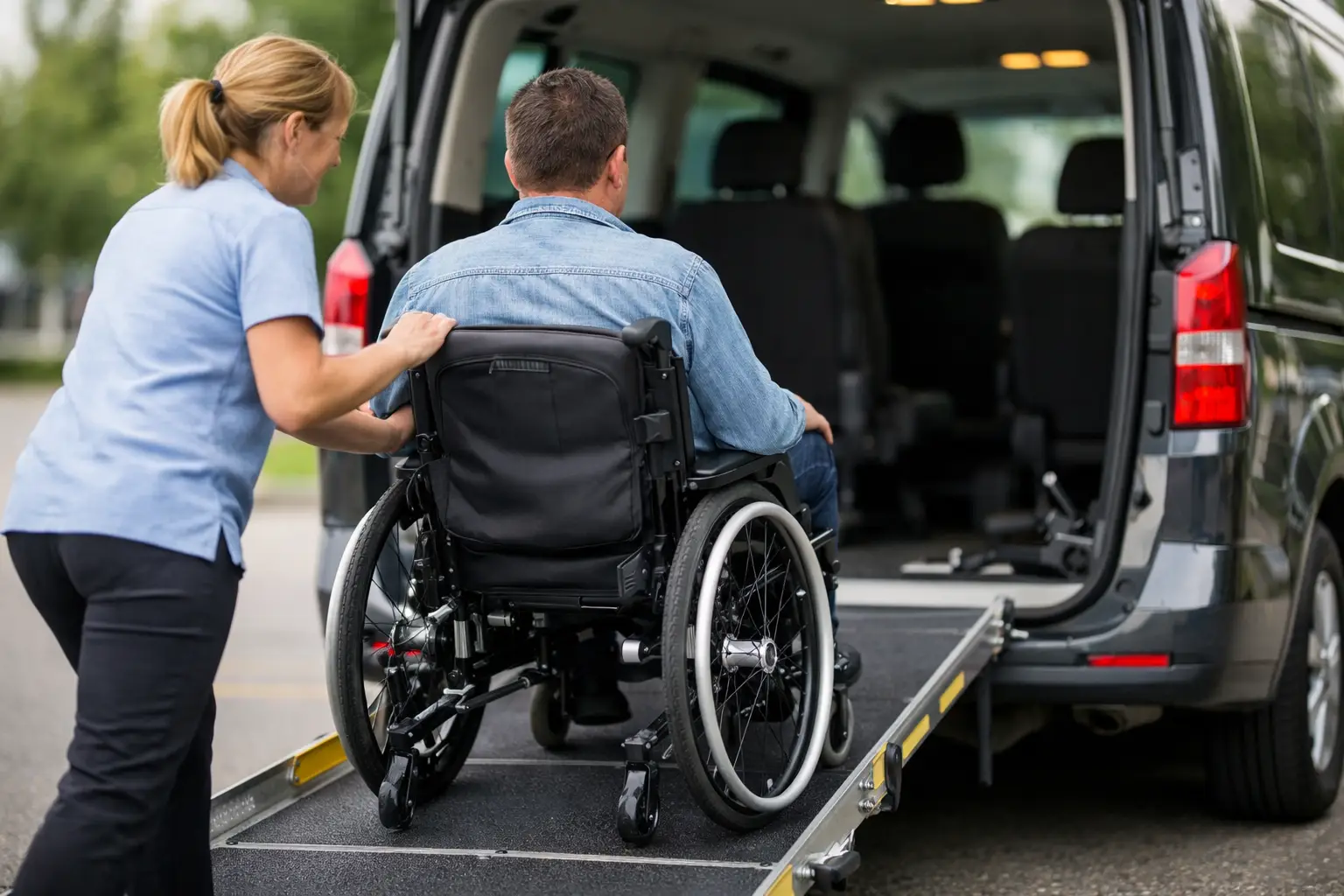
A medical appointment should not begin with the worry of getting there. For riders and families asking how to transport wheelchair users, the answer is more than finding a vehicle with extra space. Safe travel depends on a properly accessible vehicle, secure wheelchair positioning, enough time for assistance, and a driver who treats the passenger with patience and respect.
For a person who uses a wheelchair every day, the wheelchair is not simply luggage to be loaded. It is part of their mobility, comfort, and independence. Transportation should be planned around that reality, especially for recurring trips such as dialysis, rehabilitation, specialist visits, family gatherings, and social outings.
Start With the Right Type of Transportation
A standard car, taxi, or ride share may work for a folding wheelchair if the passenger can safely transfer into a vehicle seat. But it may not be appropriate for someone who remains seated in a manual or power wheelchair, has limited balance, needs oxygen, or becomes fatigued during transfers.
For those trips, a wheelchair-accessible vehicle is usually the safer, more comfortable choice. These vehicles are designed with ramps or lifts, adequate interior clearance, wheelchair tie-down systems, and passenger restraints. The rider can stay in their own wheelchair from pickup through drop-off, avoiding an unnecessary and sometimes painful transfer.
This is particularly valuable after treatment. A passenger returning from dialysis or an outpatient procedure may feel weak, dizzy, or unsteady. Asking them to move from a wheelchair into a car seat can increase the risk of a fall and create stress before the ride has even started.
Not every wheelchair-accessible service offers the same level of assistance. Before booking, ask whether the trip is door-to-door, whether the driver can assist from the building entrance to the vehicle, and whether the ride is direct or may include other passengers. For time-sensitive medical travel, a direct ride can make a meaningful difference.
How to Transport Wheelchair Users With Proper Securement
Once inside the vehicle, the wheelchair must be secured correctly. This is not a step to rush. Sudden braking, sharp turns, and uneven roads can shift an unsecured chair, even on a short journey.
A professionally equipped accessible vehicle generally uses a four-point tie-down system to anchor the wheelchair to the floor. The straps should attach to approved, sturdy points on the wheelchair frame, not to removable armrests, footrests, wheels, or other parts that may move or bend. The wheelchair brakes should also be applied, but brakes alone are not enough to hold the chair in place during travel.
The passenger needs their own seat belt or occupant restraint. The wheelchair’s positioning belt may help with posture, but it is not a replacement for a vehicle safety belt. The shoulder and lap belts should sit properly across the passenger, without twisting or resting against the neck.
Power wheelchairs require particular attention because they can be heavy and have different frame designs. The driver should confirm the wheelchair’s securement points, overall dimensions, and whether accessories such as a headrest, elevating leg rests, oxygen holder, or medical bag need extra care. If the rider has a custom seating system, ask how they prefer to be positioned before making adjustments.
Share the Details Before the Ride
Clear information at booking helps prevent surprises at pickup. The person arranging the trip should explain the type of wheelchair being used, whether it is manual or powered, and if the rider can transfer independently. Mention the approximate width and weight of the chair when known, especially for larger power chairs or scooters.
It also helps to share practical details about the pickup and destination. Is there a ramp, elevator, loading bay, security desk, or narrow hallway? Does the rider live in a high-rise building? Is the medical center entrance difficult to find? These details allow the transportation team to plan for a smoother arrival rather than trying to solve access issues at the curb.
For medical trips, provide the appointment time and ask for a pickup time that allows for traffic, check-in, and the time needed to safely board the vehicle. Arriving too early is usually easier than arriving late, particularly when a clinic has a strict registration process or a dialysis session is scheduled.
If a family member cannot travel with the passenger, leave a reliable contact number and let the provider know who will meet the rider at the destination. Good communication is a form of care. It reassures families and gives the driver a clear plan if there is a delay, a change in appointment time, or a question at drop-off.
Make Comfort Part of the Safety Plan
Safe transportation is not only about straps and ramps. A rider may be physically secure but still uncomfortable if they are cold, anxious, thirsty, or positioned poorly for a long ride.
Before leaving, check that the passenger has essential items within reach, such as a phone, water if permitted, medication, identification, appointment documents, and a light jacket. Medical equipment should be stored so it cannot roll or fall during the journey. If the passenger uses oxygen or another device, tell the transportation provider in advance so the vehicle and driver can be prepared.
Drivers should ask before touching the wheelchair or assisting the passenger. A simple question such as, “How would you like me to help?” respects the rider’s knowledge of their own needs. Some passengers appreciate an arm for balance or help with a door. Others prefer to manage independently once the route is clear. There is no single right approach except listening and gaining consent.
Temperature, ride pace, and communication also matter. A calm driver who explains what is happening – boarding, securing the chair, departure, and arrival – can reduce anxiety for passengers who have had difficult transportation experiences in the past.
Plan for Medical Appointments and Recurring Rides
Recurring medical transportation deserves a consistent routine. When the same rider attends dialysis, therapy, or follow-up appointments each week, familiarity can make the process less tiring. Keep the pickup location, preferred entrance, wheelchair details, emergency contact, and usual appointment schedule on file with the provider when possible.
Still, avoid assuming every trip will be identical. A patient’s condition can change after treatment, a clinic may run late, or a wheelchair may have been repaired or replaced. Confirm key details before each ride, especially if there has been a recent hospitalization, a new medical device, or a change in mobility.
Families should also consider the return trip. A person may be able to leave home independently but need more assistance after an appointment. Scheduling both legs of the journey with an accessible provider avoids the uncertainty of trying to arrange suitable transportation while waiting outside a clinic.
In Singapore, KE Transport supports wheelchair users with direct, non-emergency rides designed around these everyday needs, including medical visits and personal outings. The goal is not simply to get from one address to another, but to make the journey feel manageable from the front door to the destination.
Know When a Different Level of Care Is Needed
Wheelchair-accessible transportation is appropriate for many non-emergency trips, but it is not an ambulance service. If a passenger has chest pain, severe breathing difficulty, sudden confusion, uncontrolled bleeding, loss of consciousness, or another urgent medical concern, emergency services are the right choice.
For non-emergency travel, let the provider know about conditions that may affect the ride. A passenger who needs continuous monitoring, cannot sit safely in a wheelchair, or requires a stretcher may need a different type of medical transport. Being open about these needs is not a barrier to booking. It helps ensure the passenger receives the right level of support.
A good ride leaves the passenger feeling respected, settled, and ready for what comes next. Whether the destination is a clinic, a family lunch, or a favorite community event, thoughtful transportation helps keep everyday life within reach.
Leave a Reply