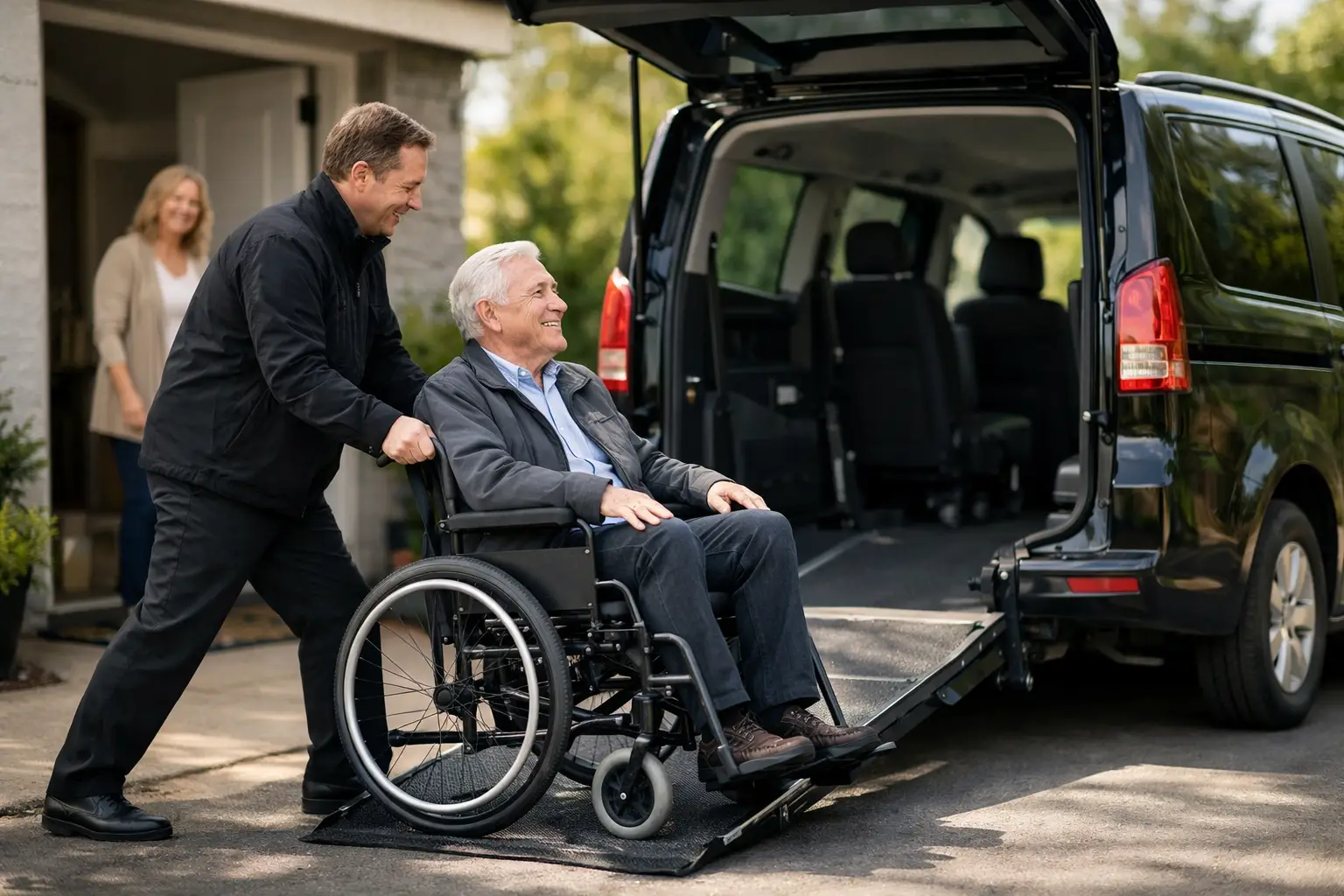
A medical appointment can be stressful before the day even begins. When getting to the vehicle involves uneven walkways, a rushed pickup, or being asked to leave a wheelchair, the trip can take more energy than the appointment itself. Door to door wheelchair rides are designed to remove those unnecessary barriers, providing direct transportation with the passenger remaining safely in their wheelchair.
For wheelchair users, and for family members arranging care, the difference is not simply convenience. It is the reassurance of knowing that someone will arrive prepared, assist respectfully, and help make the journey feel manageable from start to finish.
What Door to Door Wheelchair Rides Actually Mean
Door-to-door service means more than a wheelchair-accessible vehicle arriving at the curb. It means the driver meets the passenger at the pickup point, provides appropriate assistance to the vehicle, secures the wheelchair properly for travel, and helps the passenger reach the entrance at the destination when needed.
That practical support matters at both ends of the ride. A passenger may need help navigating a ramp, getting through a gate, or reaching a clinic reception area. After a dialysis treatment or outpatient procedure, they may be tired and ready to get home without figuring out a transfer, parking, or a long walk from a drop-off point.
The goal is to keep the journey direct and comfortable while respecting the passenger’s routine, mobility needs, and personal space. A good ride should never make someone feel like an inconvenience for using a wheelchair.
Why Direct Accessible Transportation Makes a Difference
Standard ride options may not have room for a wheelchair, a working ramp or lift, or a driver trained to secure mobility equipment. Even when a vehicle can carry a folding wheelchair, the passenger may be expected to transfer into a regular seat. For many people, that is uncomfortable, unsafe, or simply not possible.
A purpose-equipped wheelchair vehicle allows the rider to remain in their own chair throughout the trip. The chair is secured using appropriate tie-downs, and the passenger rides in a position designed for safety and comfort. This can reduce the physical strain of transfers and help protect the confidence that comes with maintaining familiar mobility equipment.
Direct service also reduces uncertainty. Instead of coordinating multiple legs of travel, waiting at a pickup zone, or asking a stranger for help at each transition, the passenger has one planned ride between two locations. For caregivers, that can mean fewer moving pieces on an already busy day.
It is especially helpful for recurring appointments
Reliable transportation becomes essential when trips happen several times a week or month. Dialysis visits, rehabilitation sessions, specialist consultations, wound care, and follow-up appointments all depend on arriving on time and returning home safely afterward.
With recurring door to door wheelchair rides, families can build a more predictable routine. The pickup time, destination details, wheelchair type, and assistance needs can be communicated clearly in advance. Familiarity does not replace careful service, but it can make regular travel feel less stressful for everyone involved.
What a Comfortable Ride Should Look Like
Accessible transportation is not only about getting a wheelchair into a van. The service experience should be calm, patient, and clear from the first booking conversation through the return trip.
A driver should allow time for safe boarding rather than making the passenger feel rushed. They should handle the wheelchair carefully, confirm that restraints are secure, and communicate what is happening before moving the vehicle or operating the ramp or lift. Small courtesies, such as checking that a bag, jacket, or mobility aid is within reach, can make a meaningful difference.
Comfort also includes communication. If a ride is scheduled for a medical appointment, the passenger or caregiver should know when to expect pickup and what information to provide. If plans change, responsive support matters. Medical schedules are not always predictable, and a transportation provider should make it as easy as possible to discuss a revised pickup time.
For riders who feel anxious about traveling, a friendly face and a respectful approach can be just as valuable as the vehicle itself. Independence is not about doing everything alone. Often, it is about having the right support to continue doing the things that matter.
Planning a Ride for Medical Care, Family Visits, or Outings
When booking accessible transportation, a few clear details help create a safer, smoother trip. Share the pickup and destination addresses, appointment or preferred arrival time, and whether the trip is one-way or round-trip. It also helps to describe the wheelchair, especially if it is powered, extra-wide, reclines, or has additional equipment attached.
Let the transportation team know about any assistance needed at the pickup or destination. For example, a passenger may need support from the building entrance to the vehicle, or may be returning from treatment feeling weaker than usual. Clear information helps the driver arrive prepared rather than making assumptions.
Allowing extra time is wise for appointments with strict check-in requirements. Traffic, building access, ramp setup, and clinic layouts can all affect timing. The right pickup window depends on the location and the passenger’s needs, but arriving a little early is generally less stressful than racing the clock.
For a return ride after a medical visit, ask how the pickup will be coordinated. Some facilities finish on time, while others do not. Knowing whether the driver will wait nearby, receive a call, or arrive at a scheduled time gives families a clear plan.
Questions Worth Asking Before You Book
Price matters, particularly for regular medical travel, but the lowest fare is not always the best value if the service does not meet the rider’s needs. A direct-service provider may price each trip based on distance and the journey requirements. Ask for a clear explanation of the expected cost and whether there are factors that could affect it.
It is also reasonable to ask whether the vehicle can accommodate the passenger’s specific wheelchair, how the chair is secured, and what level of assistance the driver provides. If insurance coverage is relevant to your situation, ask for a clear explanation rather than assuming it applies.
For many families, reliability is the deciding factor. Ask how the company handles scheduled pickups, short-notice requests, appointment delays, and communication on the day of travel. The answers should be straightforward and patient, not vague or rushed.
A Practical Option for Life Beyond Appointments
Wheelchair rides are often associated with healthcare, but accessible transportation supports everyday life as well. A trip to see relatives, attend a religious service, visit a friend, enjoy a meal, or take part in a community event can be just as important to a person’s well-being.
In Singapore, where many destinations are close but building access and travel logistics can still vary, door-to-door help can make outings more realistic. It gives wheelchair users a dependable way to participate without relying on family members to manage every part of the journey.
KE Transport approaches these trips with the same care whether the destination is a dialysis center, a specialist clinic, or a family gathering. The passenger is not just being moved from one address to another. They are being supported in staying connected to their care, their community, and the people they love.
The right ride should leave room for dignity. When transportation is planned around the person, not around the limitations of a standard vehicle, getting out the door can feel possible again.
Leave a Reply