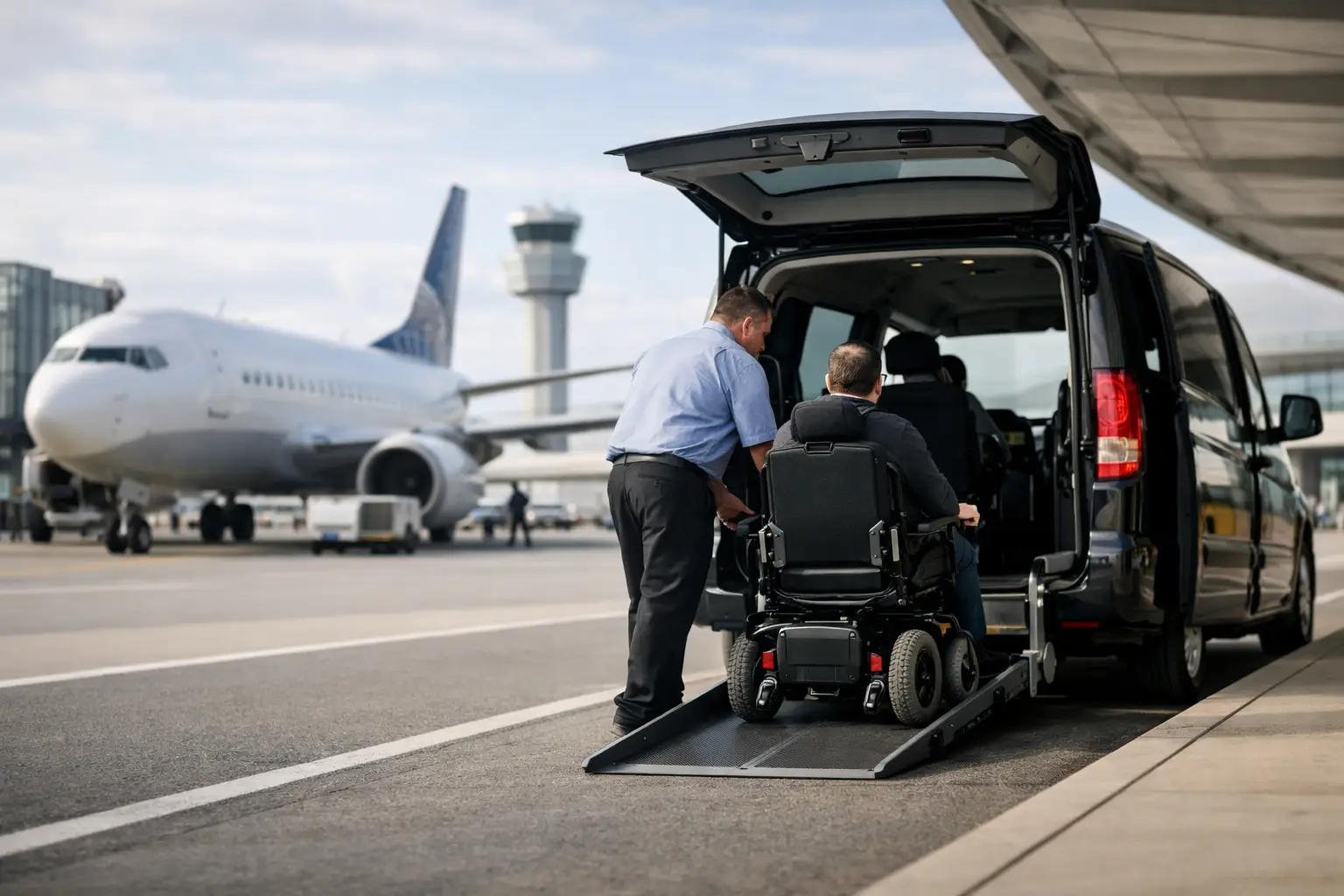
An airport trip can feel stressful long before the flight begins. When you or a loved one uses a wheelchair, finding wheelchair accessible transportation to airport service is often the part that matters most, because the wrong ride can turn a simple travel day into an exhausting one.
The goal is not just getting from home to the terminal. It is getting there safely, on time, and without unnecessary transfers, confusion, or discomfort. For many travelers, that means choosing transportation built around accessibility from the start, not trying to make a standard ride work.
What good wheelchair accessible transportation to airport service should feel like
A good airport ride should feel calm. The vehicle should arrive when promised, the driver should know how to secure the wheelchair properly, and the passenger should be treated with patience and respect.
That may sound basic, but it makes a real difference. Airport days already involve check-in times, luggage, security lines, and changing schedules. If transportation adds more uncertainty, the entire trip becomes harder for the rider and the family member coordinating it.
The best service is door-to-door. That means help from the pickup point to the vehicle, safe boarding using the right equipment, and a direct ride to the correct terminal or entrance. For some passengers, a few extra minutes of hands-on assistance can be the difference between a manageable day and a draining one.
Why a regular car service is not always enough
Some families first consider a taxi, ride-share, or standard private car. In certain situations, that may work. But for a wheelchair user, especially someone who remains seated in their chair during transport, a regular vehicle often creates problems.
The biggest issue is transfers. Moving in and out of a standard car seat can be uncomfortable, risky, or simply not possible. Even when a foldable wheelchair can fit in the trunk, the passenger may still need physical support that the driver is not trained or equipped to provide.
There is also a difference between a vehicle that can carry a wheelchair and one that is truly wheelchair accessible. A proper accessible vehicle is designed for entry, secure positioning, and safe restraint. That matters on everyday trips, and it matters even more on the way to the airport when timing and comfort are both important.
The details that matter before you book
If you are arranging airport transportation, a little planning helps avoid last-minute stress. The most useful questions are practical ones.
Start with whether the rider will remain in the wheelchair during the trip. If yes, confirm that the vehicle is equipped for that setup and that the chair can be secured properly. Not every wheelchair is the same size or type, so dimensions and weight capacity may matter.
It also helps to ask about assistance at pickup and drop-off. Some passengers need only ramp access and securement. Others need support with bags, help from the front door, or extra time getting settled. A reliable provider should be clear about what assistance is included.
Flight timing matters too. A provider that understands airport runs should factor in traffic, check-in windows, and the reality that accessible boarding often takes a little longer. Being picked up too late creates anxiety. Being picked up far too early can be tiring, especially for older adults or medically fragile passengers. Good scheduling finds the middle ground.
Airport transportation is different from other trips
A ride to a medical appointment is important, but airport travel has a different rhythm. There is luggage to manage, terminal entrances to navigate, and more variables outside the rider’s control.
That is why communication matters so much. A good provider should confirm the pickup details, understand the airline and terminal if needed, and be easy to reach if plans change. Families often feel more at ease when they know exactly who is coming, when they will arrive, and what kind of assistance will be given.
For travelers leaving from or arriving in a busy city like Singapore, timing and direct routing become even more valuable. A driver familiar with airport access points can help reduce unnecessary delays and confusion, especially during peak travel hours.
Comfort is not a small thing
People often talk about airport transportation in terms of logistics, but comfort deserves equal attention. A passenger may already be dealing with pain, fatigue, limited mobility, or medical conditions that make long travel days harder.
A smooth ride, enough space, careful driving, and proper wheelchair securement all contribute to comfort. So does being able to stay in the wheelchair rather than making awkward transfers. These are not luxury features. For many riders, they are what make travel possible.
Families feel this too. When a parent, spouse, or patient is riding in comfort, the caregiver can focus on the trip itself instead of worrying every minute about whether the ride was a mistake.
What caregivers should look for
If you are booking on behalf of someone else, trust becomes the deciding factor. You are not only choosing a ride. You are placing someone you care about in another person’s hands.
Look for a service that communicates clearly and answers questions without rushing you. If the booking process feels vague, it may be a sign of bigger problems later. Reliable transportation providers understand that caregivers need details, especially when the traveler has mobility challenges.
Punctuality matters, but so does attitude. A respectful driver who is patient and attentive can make the rider feel at ease from the first moment. That human side of service is easy to overlook until you have experienced the opposite.
It depends on the traveler
Not every wheelchair user needs the same kind of airport transportation. Someone who uses a lightweight chair and can transfer with assistance may have different options than someone using a power wheelchair who cannot safely transfer at all.
The best choice depends on mobility level, medical needs, travel distance, and how much support is required at each end of the trip. For shorter rides, families may focus mainly on access and timing. For longer rides, comfort and positioning may become even more important.
This is why one-size-fits-all transportation rarely works well. Accessibility is personal. A service that takes time to understand the rider’s needs will usually provide a better experience than one that treats every booking the same.
How to make the day go more smoothly
It helps to book early when possible, especially for morning flights or busy travel dates. Have the flight time, terminal information, pickup address, and wheelchair details ready when you call. If the passenger travels with medical equipment or extra bags, mention that in advance.
On the day itself, allow a little breathing room. Even a well-planned airport trip can involve traffic or slower loading times. Rushing creates pressure for everyone. A steady, organized start usually leads to a better experience all around.
If you are arranging a return trip from the airport, be realistic about delays. Flights change. Baggage claim takes time. Some transportation services are better than others at adjusting to real-world travel conditions, so it is worth asking how they handle changes before you book.
Choosing a service built around dignity
At its heart, accessible airport transportation is about more than getting from one place to another. It is about protecting the rider’s dignity during a part of travel that can otherwise feel difficult or exposed.
A wheelchair user should not have to feel like an inconvenience just to get to the airport. The right service recognizes that accessibility is not an extra request. It is the starting point. That is the approach providers like KE Transport are built around, with direct, supportive rides that reduce stress for both passengers and families.
When airport travel is planned with care, the day feels different. There is less tension, less guesswork, and more confidence from the moment the vehicle arrives. And for many people, that kind of steady support is what makes the whole trip feel possible.
Leave a Reply