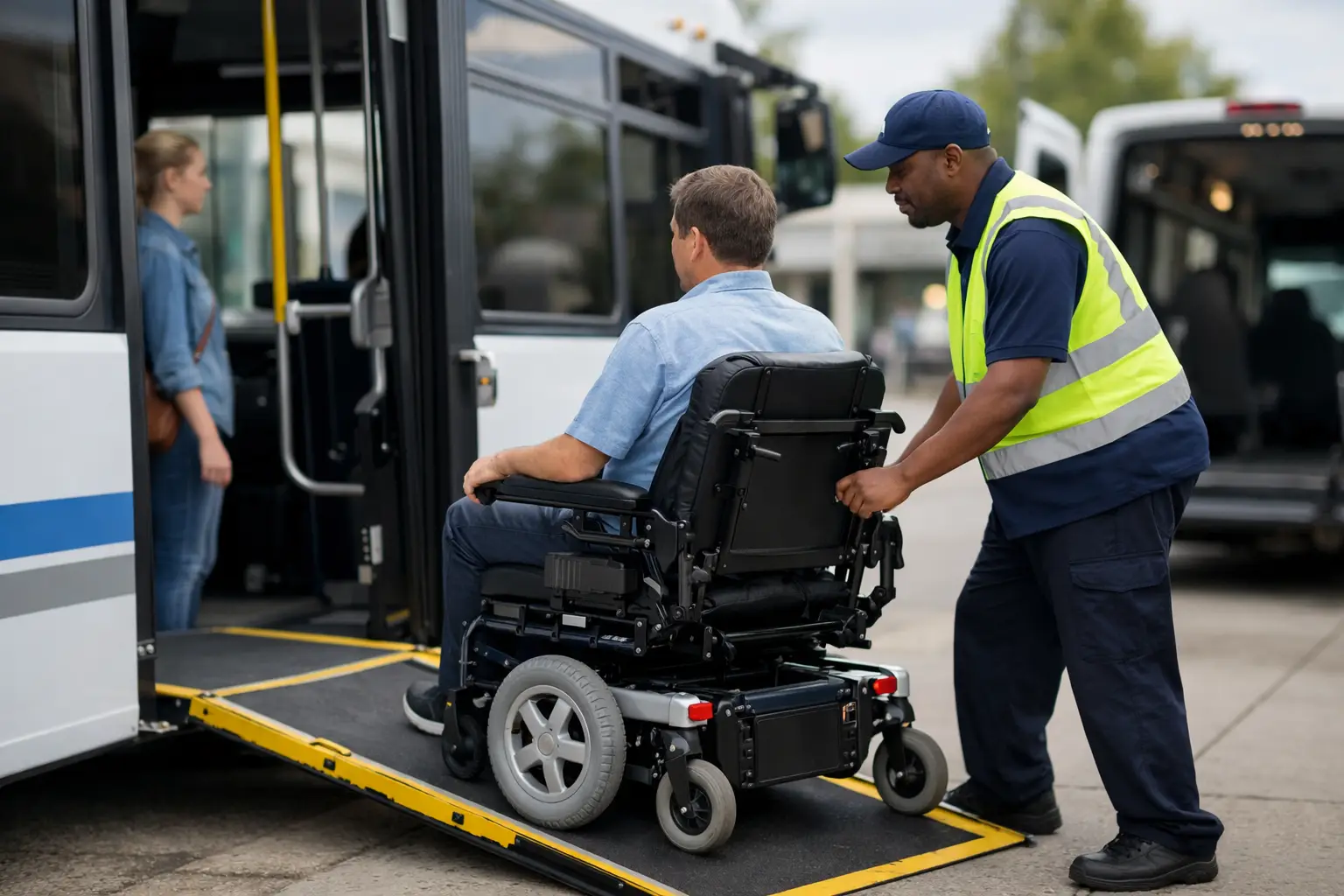
A medical appointment should not begin with the worry of getting into a vehicle. Yet for many wheelchair users and family caregivers, that is the hardest part of the trip. Understanding what wheelchair accessible transit is can make recurring rides to dialysis, specialist visits, family events, and community outings feel far more manageable.
What Is Wheelchair Accessible Transit?
Wheelchair accessible transit is transportation designed to carry a passenger while they remain safely seated in their wheelchair. Rather than asking someone to transfer into a car seat, the vehicle is equipped to accommodate the wheelchair itself, usually through a ramp or lift and a securement system.
The goal is simple: provide a safe, comfortable ride from one location to another without making the passenger adapt to an inaccessible vehicle. A good service also recognizes that accessibility is more than equipment. It includes patience at pickup, clear communication, careful handling of the wheelchair, and enough time for the rider to board without feeling rushed.
For many people, this type of transportation is used for non-emergency medical needs. That can include dialysis, physical therapy, hospital discharge, outpatient procedures, follow-up care, or routine doctor appointments. It can also support everyday life, from visiting friends to attending religious services or family celebrations.
How Wheelchair Accessible Transit Works
A wheelchair accessible vehicle has enough interior space and the right equipment to bring a rider aboard in their wheelchair. Depending on the vehicle, a trained driver may use a powered lift or a ramp. Once inside, the wheelchair is positioned in a designated area and secured to prevent movement during travel.
Securement matters. A wheelchair should not simply be parked in the vehicle and left unsecured. Proper transportation commonly involves multiple tie-down points that stabilize the chair, along with a passenger restraint positioned for safety and comfort. The driver should check that mobility equipment, personal belongings, and medical items are safely placed before the vehicle moves.
Door-to-door service is another meaningful part of the experience. It generally means the driver picks the passenger up at the requested entrance and brings them directly to their destination, rather than dropping them at a distant curb or transit stop. The exact level of assistance can vary by provider, building access, and the passenger’s needs, so it is wise to discuss this when booking.
For example, someone traveling to a dialysis session may need a reliable pickup time, space for a bag or blanket, and a driver who understands that post-treatment fatigue can make the return trip especially difficult. A rider attending a social outing may need more flexibility around the return time. Both trips require accessibility, but the practical details are different.
What Accessible Transit Is Not
Wheelchair accessible transit is not the same as a standard ride where a driver tries to fold a wheelchair into the trunk. That arrangement may work for a lightweight, foldable chair and a passenger who can transfer safely, but it is not appropriate for everyone. Transfers can be painful, exhausting, or unsafe, particularly after treatment, surgery, or when a person has limited balance or strength.
It is also different from emergency ambulance transportation. Non-emergency wheelchair transportation is intended for passengers who are medically stable and do not need emergency monitoring or urgent clinical care during the ride. If someone is experiencing chest pain, severe breathing trouble, a fall with possible injury, or another emergency, emergency services are the right call.
Public paratransit can be helpful for some riders, especially when cost is the primary consideration. However, it may involve shared rides, longer pickup windows, eligibility requirements, or indirect routes. A private wheelchair accessible transportation provider can be a better fit when a passenger needs a direct trip, more predictable scheduling, personal assistance, or support for a time-sensitive appointment.
Why the Right Vehicle and Driver Matter
Accessibility begins with the vehicle, but the driver shapes the entire ride. A lift that works properly is essential. So is enough space for the specific wheelchair, whether it is manual, powered, or larger than average. Not all vehicles can safely accommodate every chair, so sharing the wheelchair type and dimensions in advance helps avoid problems on the day of travel.
The driver should be trained in safe boarding and securement procedures. Just as importantly, they should treat the passenger as a person, not a task to complete. That means speaking respectfully, explaining what will happen before moving the chair, allowing time to get settled, and responding calmly if a rider is anxious or uncomfortable.
Punctuality also carries extra weight for wheelchair users. Missing a medical appointment may mean delayed care, a missed treatment session, or a stressful rescheduling process. For caregivers, a late ride can disrupt work, childcare, and other responsibilities. Reliable transportation protects more than a schedule. It protects peace of mind.
In Singapore, where medical visits and daily errands can involve busy buildings, limited curb space, and changing weather, advance communication is especially useful. Letting the provider know about the pickup entrance, drop-off point, apartment access, and appointment time gives the driver a clearer plan for a smoother trip.
What to Ask Before Booking Wheelchair Accessible Transit
A quick conversation before the first ride can prevent confusion later. The right questions help you confirm whether the service can meet the passenger’s physical needs and travel schedule. Ask:
- Can the vehicle safely accommodate this wheelchair type and size?
- Will the passenger stay in the wheelchair for the entire trip?
- Is the wheelchair secured with appropriate tie-downs and passenger restraints?
- Does the service provide door-to-door assistance, and what does that include?
- How early should the ride be booked, especially for recurring medical appointments?
- What information is needed about pickup access, return times, companions, or mobility equipment?
- How is pricing calculated, and is insurance coverage accepted or available for this trip?
There is no need to feel hesitant about asking for details. A dependable provider should explain the process clearly and honestly. If a particular request cannot be accommodated, it is better to know before the day of the trip than to face an uncomfortable surprise at pickup.
Planning a Comfortable Ride
For regular appointments, recurring bookings can reduce the burden of arranging transportation each week. Keep the appointment address, preferred pickup entrance, clinic contact information, and wheelchair details in one place. If the rider has a preferred arrival time, share it early. Arriving a little ahead of a medical appointment can be helpful when there are check-in lines or long walking distances inside the facility.
It also helps to mention anything that could affect the trip. Perhaps the passenger uses a powered wheelchair, needs room for a caregiver, has a building with a narrow entrance, or may be tired after treatment. These details are not inconveniences. They allow the transportation team to prepare properly.
Comfort should be part of the plan, too. A direct ride can be less tiring than a route with multiple stops. For someone with chronic pain or limited stamina, avoiding unnecessary transfers and long waits can make a real difference. On the return trip, a friendly face and a little patience can be as valuable as the lift itself.
Accessible Transportation Supports Independence
Wheelchair accessible transit gives people more choices about where they can go and when. It can help a person keep medical appointments without relying on an overwhelmed family member. It can make a lunch date, a holiday gathering, or a visit to a loved one feel possible again. For caregivers, it offers reassurance that their family member is traveling with support designed around their needs.
At KE Transport, that is the standard we aim for: careful assistance, direct rides, and respectful service that lets each passenger remain in their wheelchair with comfort and dignity. The best ride is not one that calls attention to itself. It is one that allows the passenger to focus on the appointment, the outing, or the person waiting at the other end.
When transportation is planned around the rider rather than the vehicle, getting out the door can feel less like a hurdle and more like a normal part of life.
Leave a Reply