A chair can look perfectly suitable in a store or clinic, then feel completely wrong halfway to a medical appointment. When families ask, what is the difference between a wheelchair and a transport wheelchair, they are usually trying to solve a practical problem: Can the rider move independently? Will it be comfortable for a longer outing? Can a caregiver manage it safely? The answer affects far more than the chair itself.
A standard manual wheelchair and a transport wheelchair both provide seated mobility, but they are built for different levels of independence, distance, and caregiver support. Choosing well can make regular dialysis visits, specialist appointments, family gatherings, and community outings feel less stressful for everyone involved.
Wheelchair vs. transport wheelchair: the main difference
The simplest difference is who moves the chair.
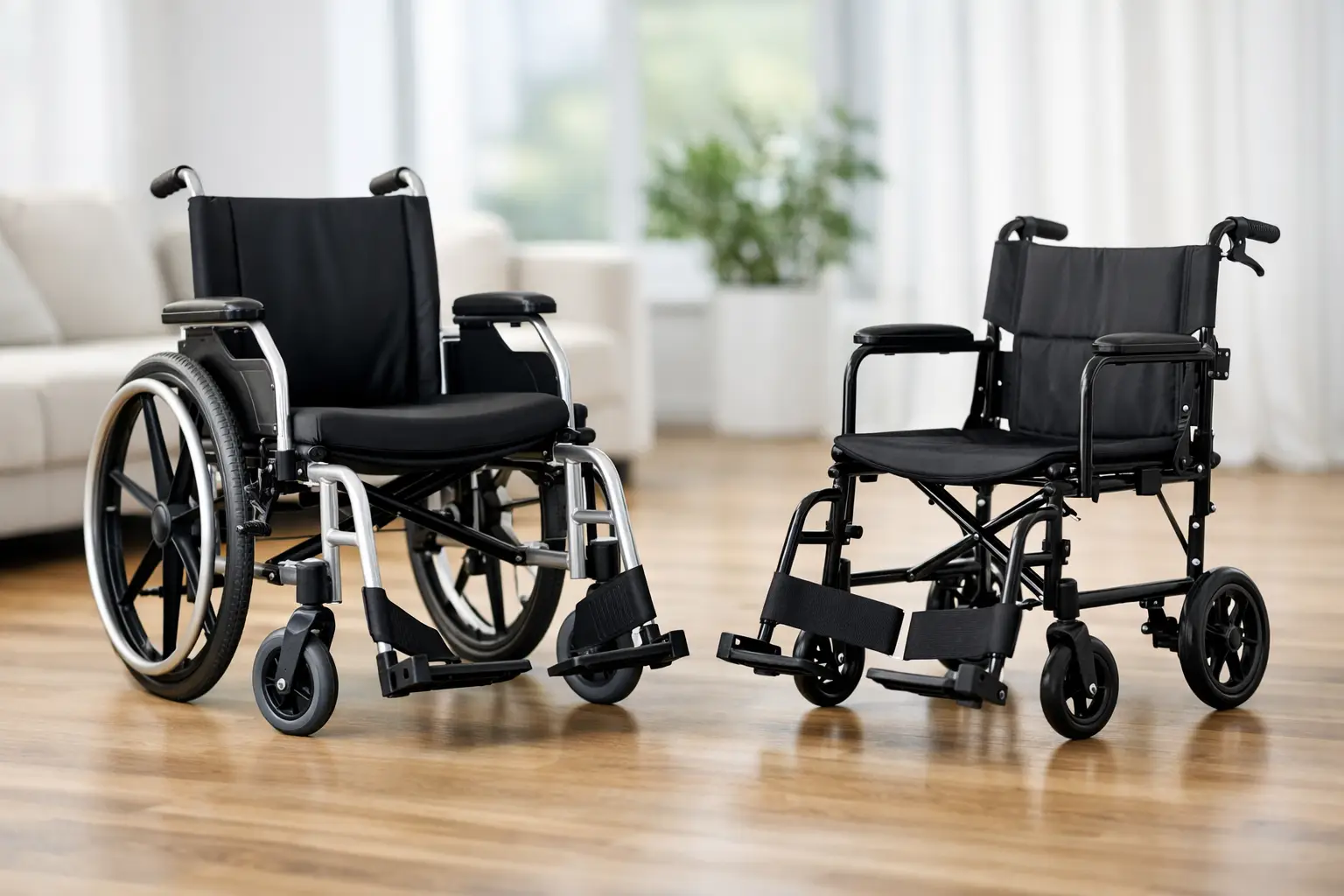
A standard manual wheelchair usually has two large rear wheels with hand rims. The person sitting in the chair can grip those rims and propel themselves forward, turn, and adjust their position. A caregiver can also push from handles at the back when needed.
A transport wheelchair, often called a transport chair, has four smaller wheels. It is designed to be pushed by another person. Because the rider cannot usually reach or use the small wheels to propel themselves, a transport chair is best when a family member, caregiver, or trained attendant will be present throughout the trip.
That design difference changes almost everything. A manual wheelchair often supports more day-to-day independence. A transport wheelchair is typically lighter, easier to fold, and easier for a caregiver to lift into a vehicle. Neither option is automatically better. The right choice depends on the rider, the trip, and the support available.
A standard wheelchair is made for self-propulsion
A manual wheelchair is often the better fit for a person who has enough upper-body strength, coordination, and endurance to move themselves at least part of the time. Its large rear wheels provide leverage, while the hand rims allow the rider to control speed and direction without touching the tire.
This can be meaningful in everyday life. A rider may want to move from one room to another, roll through a clinic hallway, position themselves at a table, or take part in an outing without having to ask someone to push every few minutes. That added control can support privacy and independence.
Manual wheelchairs also tend to provide a sturdier, more stable ride over longer distances or uneven surfaces. Many have adjustable footrests, armrests, seat widths, and back supports. For someone who spends several hours a day in their chair, fit and posture matter. A seat that is too narrow, too deep, or poorly supported can lead to discomfort, skin pressure, fatigue, and difficulty transferring.
The trade-off is weight and size. Standard wheelchairs can be bulkier than transport chairs, especially models with larger wheels and more supportive frames. They may take more effort to fold, lift, and fit into a private car. For a caregiver with back pain or limited strength, that extra weight can become a real concern.
A transport wheelchair is made for assisted trips
A transport wheelchair is designed around convenience when someone else will be pushing. Its smaller wheels reduce its overall width and weight, which can make it easier to maneuver through narrow doorways, elevators, clinic waiting areas, and crowded hallways.
Many transport chairs fold compactly and are easier to place in a car trunk. That can be helpful for a short outing where the chair is needed mainly between the vehicle and the destination, such as a restaurant visit, a medical appointment, or an airport check-in.
For a caregiver, the lighter frame can be a major advantage. Lifting a heavy chair in and out of a vehicle multiple times a week is tiring and can create a risk of strain. A transport chair may reduce that burden, particularly for family members helping an older adult attend regular appointments.
However, lighter does not always mean more comfortable. Transport chairs often have narrower seats, less padding, and fewer adjustment options than a full manual wheelchair. They may be ideal for short, supported trips but less suitable for a rider who needs to sit for extended periods or who needs to reposition independently.
Comfort is about more than the seat
A chair’s comfort depends on fit, support, ride quality, and how long the rider will remain seated. This is especially important for people who have limited sensation, chronic pain, poor trunk control, swelling, or a condition that makes it difficult to shift weight.
For a quick trip from the parking area to a doctor’s office, a transport chair may be entirely appropriate. For several hours of appointments, waiting rooms, errands, or social activities, a standard wheelchair with better seating support may be the more comfortable choice.
Before deciding, think through the full day rather than only the first five minutes. Will the rider need to wait for a long time? Is there room for their legs and feet to rest naturally? Can they maintain a safe, upright posture? Do they need a cushion, head support, elevating leg rests, or a seat belt for positioning? These details can make a significant difference in how the rider feels when they arrive home.
Safety depends on the rider and the route
Both chair types can be safe when used properly, but each has limits. A self-propelled wheelchair gives the rider more control, yet it also requires the ability to manage slopes, thresholds, curbs, and crowded spaces. A person who tires easily may need assistance even in a manual wheelchair.
A transport chair relies on the person pushing it. Caregivers should use the brakes whenever the rider is getting in or out, avoid steep slopes when possible, and keep both hands on the push handles. Footrests should be moved out of the way during transfers, then returned so the rider’s feet are supported during travel.
For vehicle travel, the chair itself is only one part of the safety plan. A rider who remains in their wheelchair during transportation needs a properly accessible vehicle, secure wheelchair tie-downs, and an appropriate passenger restraint system. It is not safe to assume that simply setting a wheelchair inside a van or car will hold it in place during sudden braking or a turn.
This is where wheelchair-accessible transportation can ease a major burden. KE Transport helps passengers travel without awkward transfers out of their wheelchairs, with vehicles and assistance designed around safer, more comfortable rides to medical appointments and other essential destinations.
Which chair is right for medical appointments?
For recurring medical trips, the best choice often comes down to endurance and the level of help available. A transport wheelchair can work well when the rider needs assistance at every stage and the outing is relatively short. It is also useful when the caregiver needs a lighter chair that is easy to fold and manage.
A standard wheelchair may be better when the rider needs independence at the destination, expects longer waits, or spends substantial time seated. It can also be a more practical long-term option for someone who uses a wheelchair at home and wants the same familiar seating and support when going out.
Some people use both. They may rely on a standard wheelchair for daily mobility and keep a transport chair for short trips with a caregiver. There is no one-size-fits-all answer, and a person’s needs can change after surgery, illness, or changes in strength.
Do not confuse a transport chair with a power wheelchair
A power wheelchair is a separate category. It uses a battery and motor, allowing the rider to drive the chair with a joystick or other control. It may be appropriate for someone who cannot self-propel a manual wheelchair but still wants independent mobility.
Power wheelchairs can offer excellent independence, but they are generally heavier, larger, and require more planning for charging, storage, vehicle access, and securement. A transport chair is not a lightweight substitute for a power wheelchair. It is an attendant-propelled chair for supported mobility.
Questions to ask before choosing
Start with the rider’s everyday reality. Can they propel themselves safely? How long will they be seated? Who will push the chair, lift it, and help with transfers? What kind of surfaces will they encounter? A smooth clinic floor is very different from uneven sidewalks, ramps, and long corridors.
It also helps to consider the vehicle and the destination. A chair that fits comfortably at home may be difficult to load into a small car. A chair that is easy to fold may not provide enough support for an all-day appointment. If the rider needs to remain in the chair during transport, arrange a service that can secure the wheelchair properly and provide patient, hands-on assistance from door to door.
The best chair is the one that helps the rider get where they need to go with comfort, safety, and dignity. Whether that means a self-propelled wheelchair, a transport chair, or a combination of both, dependable support can turn an essential trip into a smoother, more comfortable part of the day.
Leave a Reply