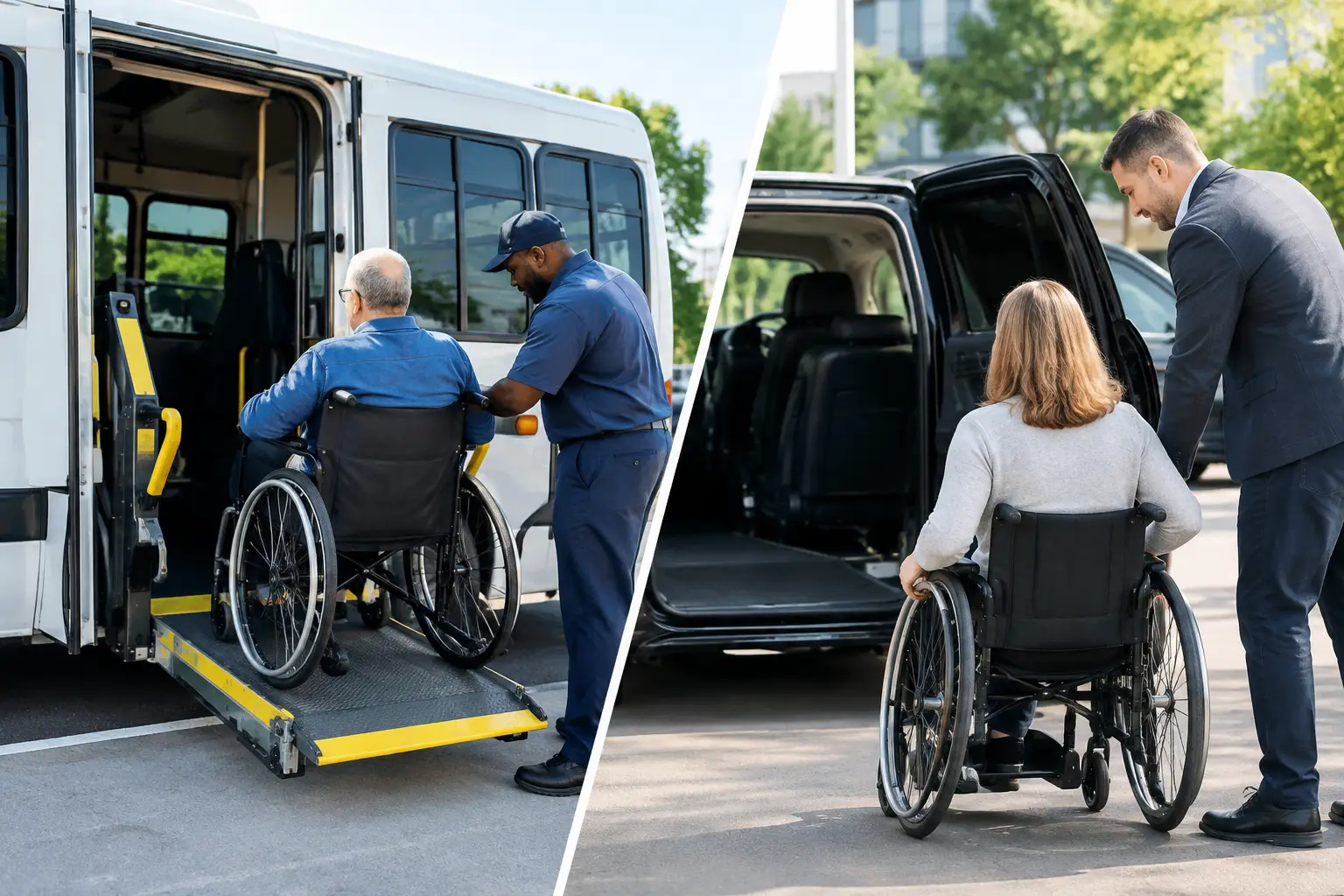
A ride to a medical appointment can look simple on a calendar, yet it may involve a wheelchair, a caregiver’s work schedule, a dialysis treatment that cannot be missed, and a passenger who is already tired or in pain. When comparing paratransit versus private wheelchair rides, the right choice is rarely only about getting from one address to another. It is about how reliably the trip fits into someone’s life, and whether the rider feels safe, respected, and comfortable along the way.
Both options can play a valuable role in accessible transportation. The better fit depends on the trip, the rider’s support needs, the flexibility of the schedule, and the level of certainty the family needs.
What Is Different About Paratransit and Private Wheelchair Rides?
Paratransit is generally a shared or public-access transportation service designed for eligible riders who cannot use regular fixed-route transit because of a disability or mobility limitation. It can provide an essential transportation option for routine travel, especially when affordability is the main concern. Each program has its own eligibility process, booking rules, service boundaries, pickup windows, and companion policies.
Private wheelchair transportation is arranged directly with a specialized provider. The ride is typically dedicated to the passenger or their party, using a vehicle designed to secure the wheelchair safely without requiring the rider to transfer into a standard car seat. Service is usually door-to-door, with personal assistance at pickup and drop-off when needed.
Neither option is automatically better for every person or every day. A rider may use paratransit for some errands and choose a private wheelchair ride for time-sensitive medical care, a special family event, or a trip where personal support matters most.
How Paratransit Can Work Well
For riders who qualify, paratransit can make regular transportation more financially manageable. It gives many wheelchair users access to the community, including shopping, social activities, and appointments that might otherwise be difficult to reach. For a trip with a flexible schedule, it may be a practical choice.
The trade-off is that paratransit commonly operates around pickup windows rather than an exact arrival time. A rider may need to be ready well before the appointment, and the return trip can involve waiting after the visit is over. Since rides may be shared, the route can include other passenger pickups and drop-offs.
That arrangement may be perfectly acceptable for a casual outing. It can be more difficult for someone with a tightly scheduled specialist visit, an early-morning procedure, or dialysis fatigue. A long wait in a lobby or clinic can feel especially hard when the passenger is uncomfortable, hungry, anxious, or simply ready to be home.
The scheduling question matters
Before relying on paratransit, ask how much timing flexibility the trip truly has. Missing a social gathering is disappointing. Missing a medical appointment that took months to arrange can have much greater consequences. The need for precision often changes the transportation decision.
What Private Wheelchair Transportation Offers
A private wheelchair ride is built around the individual trip. Instead of planning around a shared route, the provider plans around the passenger’s pickup location, destination, appointment time, wheelchair, and mobility needs. This can mean a more direct ride and clearer communication about when the vehicle will arrive.
For passengers who remain in their wheelchairs, proper securement is central to both safety and comfort. A trained driver should take time to position and secure the wheelchair correctly, check that the passenger is settled, and drive with care. That hands-on attention is not a luxury. It can reduce physical strain and help a rider feel at ease throughout the trip.
Private service can also be especially helpful for caregivers. Rather than coordinating a complex pickup window or worrying about a loved one waiting alone after an appointment, a family member can arrange a ride with clearer logistics. Responsive communication matters here, particularly when an appointment runs late or plans change with little notice.
At KE Transport, the focus is on direct, comfortable rides for passengers who need wheelchair-accessible support for medical visits, recurring treatments, personal errands, and time with family and friends.
Paratransit Versus Private Wheelchair Rides: The Practical Trade-Offs
The biggest difference is usually control. Paratransit is designed to serve a broader group of eligible riders within an established system. Private transportation is designed around a specific passenger and trip. That distinction affects timing, routing, assistance, and price.
Timing and reliability
Paratransit may require advance reservations and broad pickup windows. That can work when the rider has time to spare. Private rides are often booked for a more specific pickup time, which can make them a better fit for appointments with strict check-in requirements or scheduled treatment sessions.
No transportation provider can control traffic, weather, or an unexpectedly delayed clinic. Still, a direct-service provider can often communicate more personally when conditions change. For families, knowing who to contact and receiving a clear update can make an anxious situation more manageable.
Direct travel and physical comfort
Shared transportation can mean a longer time in the vehicle. For some riders, that is manageable. For others, extended sitting can worsen pain, stiffness, fatigue, or discomfort after treatment.
A private wheelchair ride generally travels directly between locations. Less time on the road can be meaningful after a long appointment, during recovery, or when a passenger needs to use the restroom, eat, rest, or return home promptly.
Assistance at each end of the trip
Not every passenger needs the same level of help. Some people only need a properly accessible vehicle and safe wheelchair securement. Others benefit from a driver who is patient at the curb, mindful of uneven surfaces, and willing to allow extra time for boarding without making the rider feel rushed.
Ask what assistance is included. Door-to-door service is different from curb-to-curb service, and neither term always means the same thing from one provider to another. Clarifying this before the first ride helps prevent unpleasant surprises.
Cost and payment options
Paratransit may have a lower rider fare, which makes it an important option for many households. Private wheelchair transportation is typically priced per trip, often based on distance and the service required. The higher out-of-pocket cost may be worthwhile when direct travel, timing certainty, and personal assistance are priorities.
For medical trips, it is sensible to ask whether insurance coverage, reimbursement, or other transport benefits may apply. A provider should explain its pricing and paperwork clearly rather than leaving families uncertain about what they will owe.
Choose Based on the Trip, Not Just the Ride
A useful way to decide is to look at what happens before and after the vehicle arrives. Consider the appointment time, the rider’s energy level, whether the destination can accommodate a late arrival, and whether a caregiver can be present. Also consider the return journey. A passenger may feel very different after treatment than they did in the morning.
Paratransit may be a sound choice for a planned errand with a flexible schedule and no urgent need to get home. A private wheelchair ride may make more sense for a first specialist appointment, a recurring dialysis visit, hospital discharge, a celebration where arriving on time matters, or any trip where waiting and shared routing would add stress.
The best plan can also be a combination. Keeping more than one transportation option available gives riders and families more freedom when schedules, health needs, and daily life do not fit neatly into one system.
Questions Worth Asking Before You Book
Before arranging either type of ride, confirm the pickup window or promised pickup time, whether the vehicle can accommodate the specific wheelchair, and what help the driver provides at both locations. If the trip is medical, ask what happens if the appointment runs late and whether the return ride can be adjusted.
It also helps to share practical details upfront: building entrances, ramps, elevator access, the passenger’s mobility needs, and whether a family member will travel along. These details allow the transportation team to prepare properly and give the passenger a smoother experience.
The right ride is the one that lets the passenger focus on the appointment, the outing, or the people they are going to see – not on whether they will be stranded, rushed, or uncomfortable getting there.
Leave a Reply