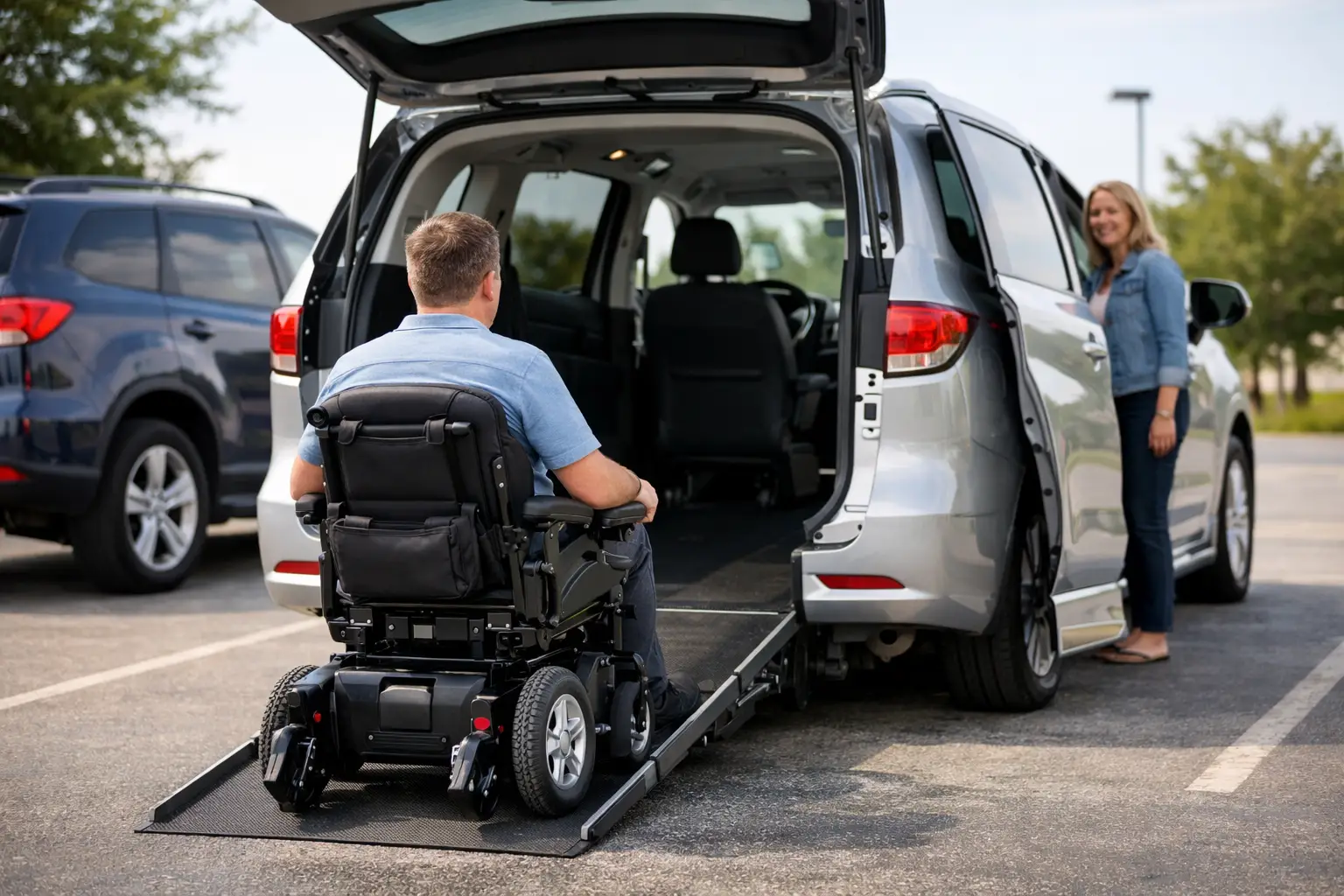
A medical appointment should not begin with the worry of getting into a car. For many riders, wheelchair accessible mobility vehicles make it possible to travel while remaining safely seated in their own wheelchair, with the comfort, space, and personal assistance a regular vehicle may not provide.
This matters for more than convenience. A ride that is designed around mobility needs can protect a passenger’s dignity, reduce physical strain, and give family members confidence that their loved one will arrive safely and on time. Whether the trip is for dialysis, a specialist visit, a family gathering, or a simple outing, accessible transportation can make everyday plans feel possible again.
What Makes a Vehicle Truly Wheelchair Accessible?
A wheelchair-accessible vehicle is not simply a larger van. It is designed or adapted so a passenger can enter, travel, and exit without an unsafe or uncomfortable transfer from their wheelchair to a standard seat.
Most vehicles use a ramp or hydraulic lift to bring the wheelchair into the vehicle. Inside, the wheelchair is positioned in a designated area and secured with a proper tie-down system. A passenger restraint is then used to help keep the rider secure throughout the journey. This setup allows the wheelchair to remain stable while the vehicle is moving, braking, or turning.
Space also makes a real difference. A vehicle should allow enough room for the wheelchair to be positioned correctly without forcing the rider into an awkward angle. It should accommodate the rider, their mobility equipment, and, when needed, a caregiver or family member traveling alongside them.
Accessibility is not only about the equipment. It is also about the people operating it. A well-equipped van is only as helpful as the driver assisting the passenger. Careful ramp or lift operation, respectful communication, and attention during securement are all part of a safe ride.
Why Wheelchair Accessible Mobility Vehicles Matter
For someone with limited mobility, an ordinary ride can involve difficult transfers, narrow doorways, insufficient space, or uncertainty about whether a driver knows how to handle a wheelchair. These challenges can turn a short trip into an exhausting experience before the appointment has even begun.
Wheelchair accessible mobility vehicles remove many of those barriers. The passenger can remain in the wheelchair that is already fitted to their body and support needs. This may be especially valuable for riders who experience pain, weakness, balance concerns, fatigue, or a higher risk of injury during transfers.
The benefit is often just as meaningful for caregivers. Coordinating transportation for a parent, spouse, or family member can be stressful when timing is tight and medical care is involved. A dependable door-to-door service reduces the number of moving parts. Instead of arranging multiple rides or trying to manage a transfer at the curb, the family has a clear plan from pickup through arrival.
For recurring appointments, reliability becomes part of a person’s care routine. Dialysis visits, rehabilitation sessions, follow-up appointments, and outpatient treatment may happen several times each month. Consistent transportation helps riders keep those commitments without asking friends or relatives to rearrange their schedules every time.
The Difference Between Accessible Transport and a Regular Ride
A regular ride may work for a passenger who can transfer independently and whose folding wheelchair can fit in the trunk. But it is not the right choice for everyone. If a rider uses a powered wheelchair, has a larger manual wheelchair, needs to stay seated during travel, or requires hands-on mobility assistance, a purpose-equipped vehicle is usually the safer option.
There is also a difference in the service experience. A standard driver may be focused on getting from one address to another. An accessibility-focused driver understands that boarding takes time and should never be rushed. They know that safe positioning and securement come before departure, and that a passenger may need help at both ends of the journey.
That does not mean every trip requires the same level of support. Some riders travel independently but need a ramp-equipped vehicle. Others may need a friendly face to assist from the door to the vehicle, help with bags, and wait until they are safely situated. The right service should consider the individual rather than making every rider fit the same process.
What to Look for When Booking Accessible Transportation
The right transportation provider should make it easier to plan a trip, not harder. When calling to book, it helps to share the basics: the type of wheelchair used, whether it is manual or powered, the passenger’s approximate needs for assistance, the pickup and destination, and any appointment time that cannot be missed.
A responsive provider will ask practical questions rather than make assumptions. They may confirm the wheelchair size, whether a caregiver will travel, if there are stairs or access restrictions at either location, and how much time is needed for a comfortable pickup. These details help prevent surprises on the day of travel.
It is also reasonable to ask how the wheelchair is secured, whether drivers are experienced with passengers who remain in their chairs, and what happens if an appointment runs longer than expected. Clear answers show that the service takes passenger safety seriously.
Price matters, especially for frequent trips, but the lowest quote is not always the best value. A ride that arrives late, cannot accommodate the wheelchair properly, or leaves a passenger waiting after an appointment can create far greater stress than a transparent per-trip rate. Look for clear communication about distance-based pricing, waiting time, payment, and any insurance-related questions before the ride is scheduled.
Planning for Medical Appointments and Recurring Care
Medical transportation has its own rhythm. Many appointments involve check-in times, delays, fatigue after treatment, or instructions not to travel alone. Planning ahead gives everyone more breathing room.
For a first visit, schedule pickup with enough time for safe boarding and traffic conditions. It is better to arrive calmly than to rush through securement because the appointment is approaching. If the passenger has mobility equipment, medications, a coat, or a small bag, keep these items accessible and let the driver know if assistance will be needed.
For dialysis or other repeat appointments, keeping a regular booking schedule can be helpful. The transportation team becomes familiar with the rider’s pickup location, chair setup, preferred assistance, and appointment routine. That familiarity can make each ride feel less stressful, especially on days when the passenger is tired.
In Singapore, where specialist clinics and hospitals can involve busy arrival areas, door-to-door coordination is particularly useful. A provider who communicates clearly about pickup points and return timing helps riders avoid unnecessary waiting or confusion.
Comfort and Dignity Are Part of Safety
Safety equipment is essential, but a safe trip should also feel respectful. Passengers should not be spoken over, rushed, or treated as a piece of equipment to be loaded. The rider should be included in conversations about how they prefer to be assisted and how their wheelchair should be handled.
Small details can shape the whole experience: a driver who arrives when promised, takes time to secure the chair correctly, checks that the passenger is comfortable, and offers calm reassurance when traffic or an appointment delay changes the plan. These actions build trust over time.
At KE Transport, the goal is to provide smooth, comfortable rides that allow passengers to travel directly between the places that matter to them. Medical care may be the reason for a trip, but transportation also supports visits with friends, family occasions, errands, and a continued connection to the community.
A wheelchair should never shrink someone’s world. With a vehicle, driver, and booking process built around accessibility, getting out can feel less like a logistical challenge and more like what it should be: a safe way to get where you need to go.
Leave a Reply